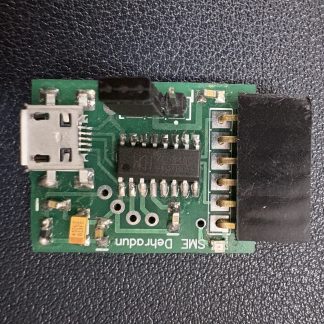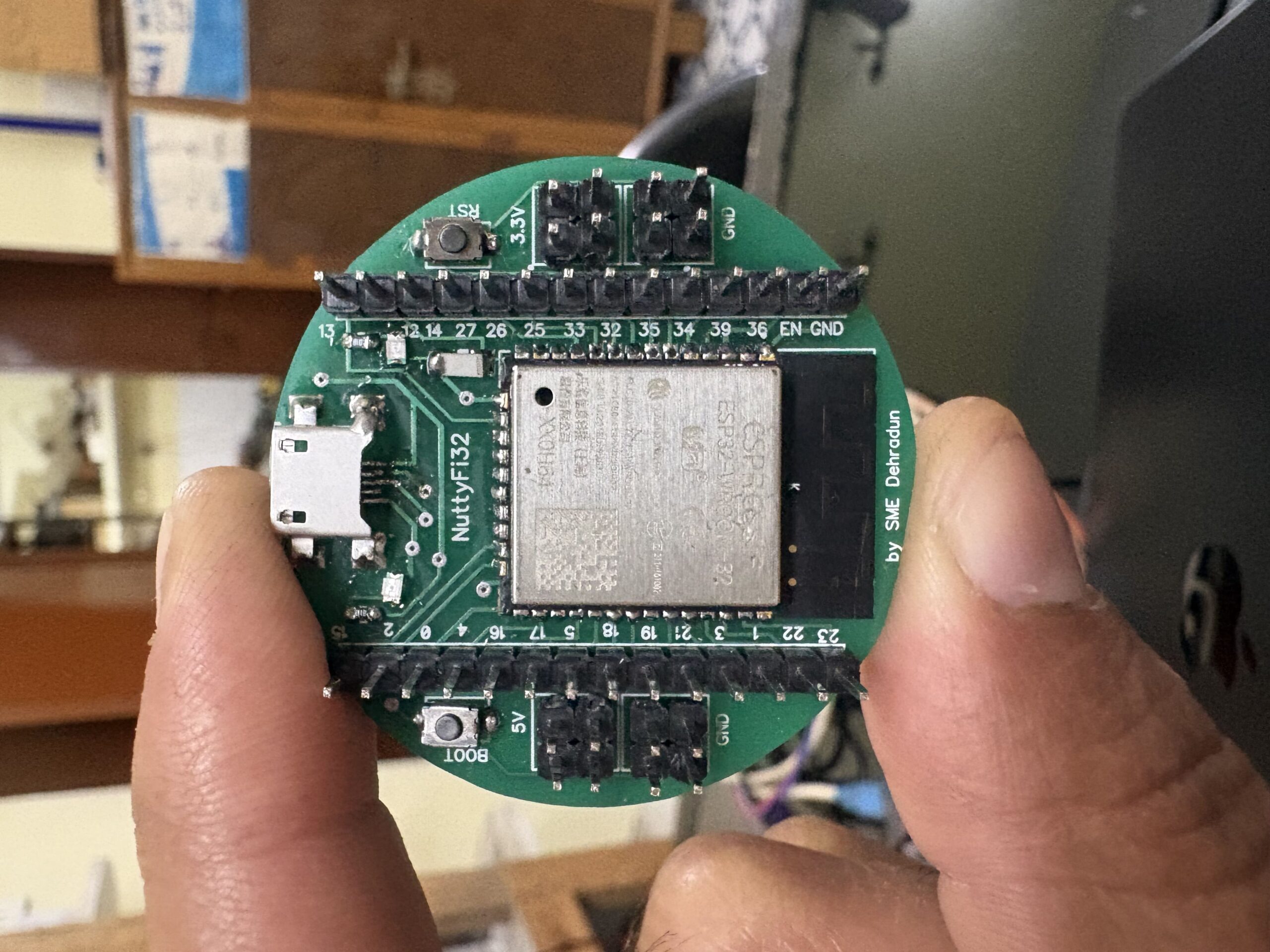
The NuttyFi32 board has its own dedicated Arduino Board Package, allowing users to install board support directly using a custom Board Manager JSON—without selecting a generic ESP32 board.
While the official ESP32 board package installs support for multiple ESP32 boards, increasing storage usage and IDE complexity, NuttyFi32 uses an independent and board-specific package.
This keeps the installation lightweight, fast, and easy to manage, making NuttyFi32 ideal for developers who prefer a clean and focused Arduino development environment.
Follow the below steps
✅ Step 1: Install Arduino IDE
-
Download and install the latest Arduino IDE:
👉 https://www.arduino.cc/en/software -
Launch the Arduino IDE.
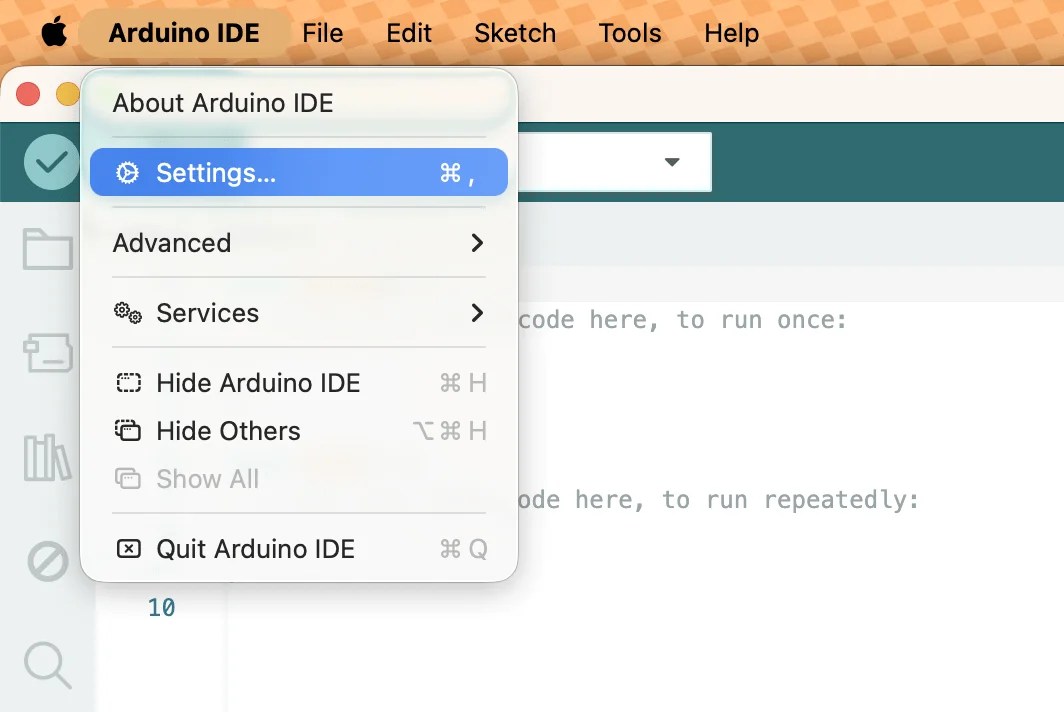
In Arduino IDE go to:
File → Preferences

Note: If you are using MacOS: Arduino IDE, Then: Settings
2. Find the field labeled:
Additional Boards Manager URLs
3. Add this URL:
https://raw.githubusercontent.com/itsbhupendrasingh/nuttyfi32/Master/package_nuttyfi32_index.json
Tip: Arduino IDE supports multiple Additional URLs. Put each on a new line (IDE 2.x) or separate with commas (IDE 1.8.x).
Like- https://raw.githubusercontent.com/itsbhupendrasingh/Nuttyfi/main/package/package_nuttyfi_index.json, https://raw.githubusercontent.com/itsbhupendrasingh/nuttyfi32/Master/package_nuttyfi32_index.json,
Click OK.
If you want to install NuttyFi2.0 Board in your Arduino IDE, then just follow our another tutorial guide on How to install NuttyFi2.0 Board in Arduino IDE.

✅ Step 3: Install NuttyFi32 Board Package
Go to:
Tools → Board → Boards Manager

In the search bar type:
nuttyfi32

When the NuttyFi32 board package appears, click:
install- Wait for the installation to complete.
✅ Step 4: Select NuttyFi32 Board
Go to:
Tools → BoardScroll down the list and choose:
NuttyFi32
This ensures all board-specific configurations (flash size, CPU settings, partitions, etc.) are correct.

🪛 Step 5: Select COM Port
Connect your NuttyFi32 board via USB-C cable.
Go to:
Tools → PortSelect the port assigned to the board
(e.g.,COM5on Windows or/dev/ttyUSB0on Linux/macOS).

Note: The COM port shown in the example image may be different on your system. Always select the port that appears when the NuttyFi32 board is connected.
🧑💻 Step 6: USB Driver Installation (If Needed)
If your computer does not detect the board, you may need to install NuttyFi32 USB-to-UART drivers.
Note: Still the NuttyFi32 board does not appear in the COM port list or you face USB driver issues, please watch this troubleshooting video below:
🧪 Step 8: Upload a Test Sketch
Let’s verify the NuttyFi32 board by running a simple test program.
✅ Led Blink Test Sketch (inbuilt).
Copy the code below and paste it into the Arduino IDE. Upload the sketch to the NuttyFi32 board.
After successful upload, the on-board LED will blink at an interval of 1000ms (1 second), confirming that the board is working correctly.
✅ Open the Serial Monitor at 115200 baud to view the LED status messages.
// Minimal Blink for NuttyFi32 inbuilt Led

#const int LED_PIN = 13;   // NuttyFi32 built-in LED

void setup() {
  Serial.begin(115200);
  delay(50);
  Serial.println("Simple blink start on NuttyFi32");
  pinMode(LED_PIN, OUTPUT);
}

void loop() {
  digitalWrite(LED_PIN, HIGH);   // LED ON
  Serial.println("LED ON");
  delay(1000);

  digitalWrite(LED_PIN, LOW);    // LED OFF
  Serial.println("LED OFF");
  delay(1000);
}
✅ LED Fade Test Sketch (inbuilt)
This example demonstrates PWM-based LED fading on the NuttyFi32 board using the ESP32 LEDC (LED Control) peripheral.
Copy the code below and paste it into the Arduino IDE, then upload the sketch to the NuttyFi32 board.
After a successful upload, the on-board LED connected to GPIO 13 will gradually fade in and fade out, verifying PWM functionality and confirming that the NuttyFi32 board is operating correctly.
✅ Open the Serial Monitor at 115200 baud to view the LED status messages.
// NuttyFi32 IoT Board onboard LED (GPIO13), active-LOW

const int LED_PIN = 13;      // Built-in LED on NuttyFi32
const int PWM_CH = 0;        // Channel 0–15
const int PWM_FREQ = 5000;   // 5 kHz
const int PWM_RES = 8;       // 8-bit (0–255)

int brightness = 0;
int fadeAmount = 5;

void setup() {
  Serial.begin(115200);
  delay(200);   // small delay for serial monitor

  Serial.println("NuttyFi32 LED Fade Example Started");

  ledcSetup(PWM_CH, PWM_FREQ, PWM_RES);
  ledcAttachPin(LED_PIN, PWM_CH);
}

void loop() {
  ledcWrite(PWM_CH, brightness);

  // print current brightness
  Serial.print("Brightness: ");
  Serial.println(brightness);

  brightness += fadeAmount;

  if (brightness <= 0 || brightness >= 255) {
    fadeAmount = -fadeAmount;
  }

  delay(30);
}
⭐ NuttyFi2.0 Resources
For source code, board packages, updates, and documentation, visit the official NuttyFi GitHub repository: